
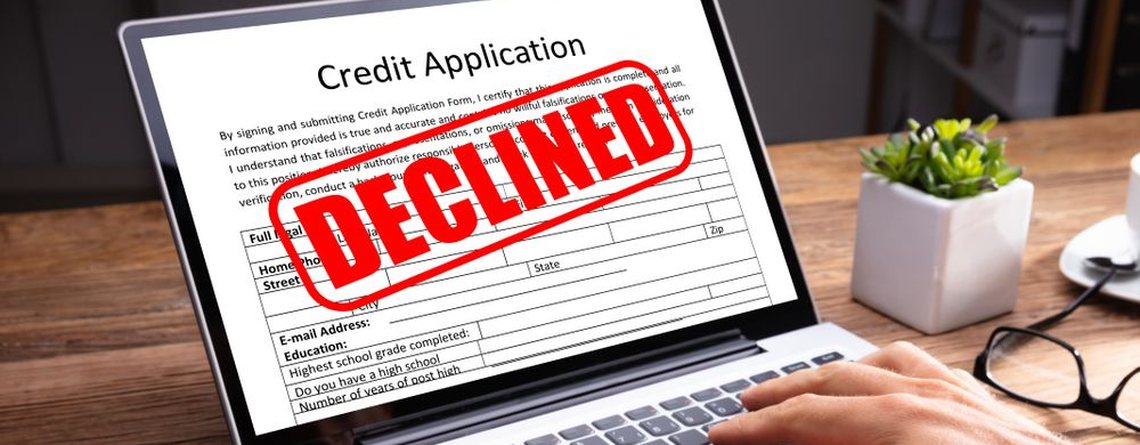
In South Africa, the word "blacklisted" is used every day, even though technically it no longer exists in the National Credit Act. The formal term is now "adverse credit listing" or "having a negative credit record." But call it what you want — the effect is the same. One day you apply for a cellphone contract, clothing account or car finance, and you get a blunt "Declined." You are blacklisted.
And the scary part? It is much easier to get blacklisted in South Africa than most people think.
1. You Don't Need to Owe Millions
Most people think blacklisting only happens to people who owe hundreds of thousands of rands or who have been reckless with money. The truth is, you can be blacklisted for as little as R200.
Any credit provider you have an agreement with — clothing stores, cellphone networks, Telkom, your bank, or even your municipal account — can list you if you default. Here is how little it takes:
a) One or Two Missed Payments — 30 to 60 Days
This is the most common way South Africans get blacklisted. Don't pay your account for 30 days, and the creditor reports a "late payment" to the credit bureaus. Miss 60 days, and it becomes a 60-day arrear. Miss 90 days, and it becomes a serious adverse listing.
Banks and retailers automatically report your payment behaviour every month to the major credit bureaus: TransUnion, Experian, Compuscan and XDS. You don't get a phone call warning you that you are about to be blacklisted — the system does it automatically.
A common scenario: you lose your job in January, you pay rent and buy food first, and skip your clothing account and cellphone bill for two months. By March, you are already listed as a slow payer — and that listing stays for 12 to 24 months even after you pay.
b) The "I Forgot" Accounts — Subscriptions and Contracts
Many people get blacklisted not for loans, but for contracts they forgot about. A gym contract you cancelled verbally but not in writing. An old ADSL line from 3 years ago that you thought was closed but still had R150 outstanding. A TV subscription that continued after you moved.
These small amounts are often handed over to debt collectors, who add fees and interest — and then list you for a R400 debt that started as R90.
c) Being a Guarantor or Co-Signing
Did you sign as surety for a friend, brother or colleague for a car or house? If they stop paying, it is your credit record that gets damaged too. The bank does not care who was supposed to pay — the listing goes to both parties.
d) Judgements and Default Judgements — The Silent Killer
This is the worst type of blacklisting. If you owe money and the creditor takes you to court, and you don't show up — because you moved, you didn't get the summons, or you thought it was a scam SMS — the court can grant a default judgement against you.
A judgement stays on your credit profile for 5 years, even if you pay it the next day. It only clears after 5 years, or if you pay and then apply to have it rescinded, which costs lawyer's fees. With a judgement, you will not get vehicle finance from any traditional bank.
e) Applying for Too Much Credit at Once
Every time you apply for finance, it leaves a hard enquiry on your report. Apply for 5 personal loans and 3 car finance applications in one week, and banks see you as high-risk. This is called "credit hungry" behaviour, and it drops your score drastically.
f) Retail Accounts Are Credit Too
Many young South Africans get blacklisted at 19 or 20. They open a clothing or sports store account for R1,500, miss payments, and by 22 — when they need a car to get to work — their credit score is already below 550.
2. How Long Does Blacklisting Last?
This is where people get confused:
- Late payments: 12 months from when you bring the account up to date
- Adverse listings / defaults: 12–24 months after you settle
- Debt review flag: stays until you get a clearance certificate, which can take years
- Judgement: 5 years minimum
- Administration order: 5 years or longer
So even if you are now earning well and can afford a car, your past from 2 years ago is still punishing you.
3. The Real Consequence: No Car Means No Income
In South Africa, not having a car is not just an inconvenience. In Johannesburg, Pretoria, Durban and Cape Town, public transport can be unreliable and unsafe, especially if you work shifts. Many employers ask, "Do you have reliable transport?" If you say no, you don't get the job.
But traditional banks work on a simple rule: bad credit = no finance. They don't look at whether you can afford it now. They look at what you did in 2023.
You need a car to get a better job, but you need a better job to fix your credit to get a car.
4. The Solution for Blacklisted South Africans: Rent To Buy A Car
If your credit score is below 600, you are under debt review, you have judgements, or the banks have said no, you are not out of options. Rent To Buy A Car was built specifically for this South African reality.
Instead of applying for a bank loan that will almost certainly be declined — and hurt your score with another enquiry — you rent the car with the option to buy it. At the end of your rental term, you can own it for just R1,500.
1. No Traditional Bank Approval Needed
Rent To Buy A Car does not put you through the automated decline systems of the big banks. We assess affordability based on your current income and expenses, not just your credit history from 2 years ago.
2. You Get the Car Now, Not After 5 Years
You don't have to wait for your judgement to clear in 2029. You can be driving within days, in a reliable, quality car you can use for work, for your family, and to build your life back.
3. It Helps You Rebuild
While rent to buy doesn't directly change your bureau score, stable transport helps you keep your job and pay off your other debts faster — and that is what clears your name.
4. No Big Deposit Shock
Rent to buy deals are structured with a smaller upfront payment compared with the huge deposits banks want from high-risk clients.
5. Debt Review and ITC Friendly
If you are under debt review or have an ITC listing, traditional finance closes the door immediately. Rent To Buy A Car understands these situations and still considers your application.
Approval and deposit requirements may vary depending on the selected vehicle and applicable terms. Apply to see if you qualify.
Frequently asked questions
Can I be blacklisted for a small amount?
Yes. You can be listed for as little as R200 if you default on an account with any credit provider, retailer, cellphone network or municipality.
How long does a judgement stay on my credit record?
A judgement stays on your credit profile for 5 years, even if you pay it the next day, unless it is rescinded.
Can I get a car if I'm blacklisted?
Yes. Rent To Buy A Car assesses affordability based on your current income and expenses, so blacklisted, ITC-listed and debt review clients can still apply.
Does applying for lots of credit hurt my score?
Yes. Every finance application leaves a hard enquiry. Many applications in a short time is seen as "credit hungry" behaviour and lowers your score.
Your Credit History Is Your Past — Not Your Future
If you have been told "you are blacklisted" and feel like there is no way forward, you are not alone. It can happen from one missed clothing account. It happens to teachers, nurses, police officers and office workers every day in South Africa.
Don't let a bureau listing keep you from earning a living. Contact Rent To Buy A Car today for a no-obligation affordability assessment and find out which cars or bakkies you qualify for — even with bad credit. Apply now, WhatsApp us on 082 714 7154 or email sales@renttobuyacar.co.za.
Read next: Blacklisted in 30 days? Here's how thousands are still driving anyway.